
Please note that I use Amazon associate links in all the links in this article. That means I’ll get a commission on anything you end up purchasing.
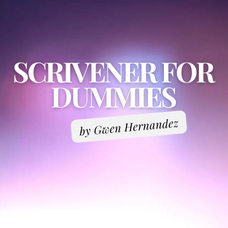
I’ve been using Scrivener for many years to write my books, dating back to when version 1.0 was the current version. Scrivener is a great tool that provides a valuable service that can be hard to grasp right away. Although Scrivener for Dummies is a bit outdated, as it directly refers to version 2.0, it is still a great book. It walks you through everything you need to know while keeping it simple and to the point.
I highly suggest that anyone getting started with Scrivener reads this book and takes in everything it has to offer.

- Hernandez, Gwen (Author)
- English (Publication Language)
- 416 Pages – 08/20/2012 (Publication Date) – For Dummies (Publisher)
Created For The Writers of The World
At first glance, the book’s bright cover and the iconic “Dummies” branding may give the impression of a simplistic approach. However, don’t let appearances fool you. “Scrivener For Dummies” is a meticulously crafted resource that delves deep into the intricacies of this versatile software, catering to writers of all levels and genres.
One of the book’s standout features is its well-structured layout. Hernandez has a knack for breaking down complex concepts into easily digestible chunks, making even the most daunting features of Scrivener accessible to the novice user. From setting up your first project to mastering advanced formatting and compilation options, each chapter builds upon the previous one, ensuring a smooth learning curve.
The book’s true strength lies in its ability to cater to a wide range of writing styles and genres. Whether you’re a novelist, screenwriter, academic, or blogger, “Scrivener For Dummies” has something for everyone. Hernandez provides tailored advice and best practices for each writing discipline, ensuring that you get the most out of the software’s robust features.
For novelists, the book delves into the art of structuring your manuscript, organizing research materials, and tracking character arcs and plot points with ease. Screenwriters will appreciate the guidance on formatting scripts, tracking revisions, and seamlessly exporting their work to industry-standard formats.
Academic writers will find solace in the book’s comprehensive coverage of citation management, footnotes, and endnotes, as well as its seamless integration with reference managers like EndNote and Zotero.
Outdated, but Still Relevant
However, it’s important to note that “Scrivener For Dummies” was written with Scrivener 2.0 in mind, while the software has since been updated to version 3.0. While the core principles and functionality remain largely the same, some of the specifics, such as menu locations and minor feature updates, may differ. Hernandez acknowledges this limitation in the book’s introduction, encouraging readers to supplement their learning with online resources and the official Scrivener documentation.
Despite this minor drawback, “Scrivener For Dummies” remains a valuable resource for writers of all levels. Hernandez’s clear and engaging writing style, coupled with her wealth of experience, makes this book a joy to read and a trusty companion on your writing journey.
The Binder
One of the book’s standout chapters is the one dedicated to project organization and the famed “Binder” feature. Hernandez’s insights into structuring your work, creating custom metadata, and utilizing keyword search and project notes will undoubtedly save you countless hours of frustration and lost productivity.
The book also shines when it comes to the oft-overlooked aspect of writing software: the compilation and export process. Hernandez provides detailed guidance on formatting your manuscript for print, ebook, and various other formats, ensuring that your work looks professional and polished, no matter the medium.
In addition to the technical aspects, “Scrivener For Dummies” also offers valuable advice on writing habits, productivity tips, and mindset strategies. Hernandez’s experience as a writing instructor shines through, providing readers with the motivation and inspiration they need to tackle even the most daunting writing projects.
Conclusion
Overall, “Scrivener For Dummies” is a comprehensive and well-written guide that empowers writers to unlock the full potential of this powerful software. While the book’s version compatibility may require some supplemental research, its wealth of knowledge and practical advice make it an invaluable addition to any writer’s toolkit. Whether you’re a seasoned pro or a budding author, this book will undoubtedly elevate your writing experience and help you achieve your creative goals with greater efficiency and organization.